Trees Company Blog
Investing in Canada’s forests and our future
Posted: 2026.11.13
Trees Company Blog
Posted: 2026.11.13
For many Canadians, a forest is more than a landscape. It is the quiet calm beneath the trees, the fresh scent after a rain, or the joy of a familiar trail full of happy memories.
In a recent survey, nearly 90 per cent of people responded that forests are a vital part of our national identity. Meanwhile, threats to our forested landscapes are rising as wildfires, extreme weather, and invasive species take their toll.
“We all have a connection to forests,” says Jess Kaknevicius, Chief Executive Officer of Forests Canada, a national charity focused on conserving, restoring and growing forested landscapes across the country.
Ms. Kaknevicius is personally passionate about helping people experience a forest. A first walk under a leafy canopy or planting their first tree can stay with someone for years, awakening a deeper understanding of why forests matter. “That early bond with nature may inspire someone to work or play in a forest – and one day, to give back,” she explains.
This connection to our forests translates directly into Forests Canada’s largest area of work: forest recovery and restoration.
Top of mind for the organization is: How do we contribute to forests today to support our future generations?
“We lead forest restoration efforts, not just by planting trees, but by ensuring we're growing diverse, resilient, thriving forests. The act of planting a tree is one step in a long and complex process of restoring Canada’s forests.”
The organization uses a systematic approach, she explains. Forests Canada has built a unique infrastructure that takes expertise, ecological research, and long-term planning to support native seed collection, nurseries growing future stock, local tree planters, and ongoing care. The end game, she adds, “is making sure those projects are successful and they establish future forests.”
Unfortunately, the challenges of climate change make the goal much harder to achieve. “Climate is impacting fire behaviour and increasing severity and intensity of fire. It’s impacting insect species and disease, and that's impacting forested landscapes.”
Forests are also a climate solution, she points out. “Forest restoration is one of the most powerful climate adaptation tools supporting heat mitigation, flood reduction, watershed protection, and species migration.”
Building resilience in our forests is key to addressing these threats, says Ms. Kaknevicius.
She stresses the myriad benefits of healthy and resilient forests. “They clean our air, protect our water, provide local employment, and are important for cultural connection and ceremony,” noting “healthy, resilient forests deliver measurable benefits for communities, biodiversity, and climate adaptation.”
In Canada especially, nearly 40 per cent of the land is forested. “When we have resilient forests, we have a resilient economy. In fact, Canada’s long-term prosperity depends on healthy, resilient forests.”
To tackle the problems and challenges that forests face, Ms. Kaknevicius says, “collaboration is critical and we are fortunate to work with a trusted network of partners across the country to achieve the impact required at the necessary scale.”
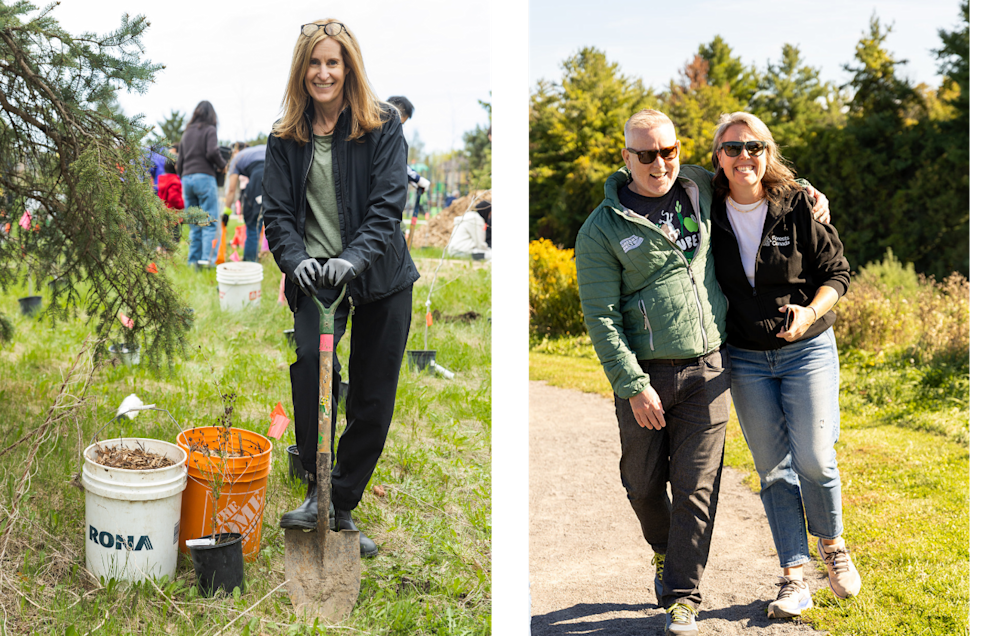
One of those partners, RBC Foundation, shares Forests Canada’s conviction that diverse, resilient and thriving forests are critical today and for future generations. Thea Silver, Senior Director, Environmental Impact, notes that “RBC’s community investment strategy reflects the fact that climate change and biodiversity loss are inextricably linked and must be tackled together.
“The work of Forests Canada does just that. With their mission to conserve, restore, and grow Canada’s forests to sustain life and communities, there was natural alignment with outcomes RBC seeks to support.”
RBC recognizes that while “environmental causes are chronically underfunded, RBC Foundation has a long history of working with communities to help address important environmental challenges that are causing deep and lasting impacts on our society, economy and the planet.” RBC has “evolved from largely transactional relationships with our community partners to more intentional, trust-based relationships, understanding the need for long-term relationships and multi-year support,” says Ms. Silver.
That insight – that it takes years to realize ecological outcomes, over decades and even generations – is something Ms. Kaknevicius says is crucial to understanding the full impact of Forests Canada’s restoration efforts. “From an investment perspective, it’s important to appreciate that strengthening forest resilience in Canada requires sustained, long-term commitment to achieve the ecological benefits that we all enjoy today, and that my son will be able to experience well into his lifetime and beyond.”
“Everything is connected. We're in forest ecosystems; we contribute to them, and they are part of our everyday lives.”
Forests Canada has significant restoration efforts planned across the country, but this vital work depends on continued support. To help conserve, restore, and grow Canada’s forests, please consider making a donation to Forests Canada.
A variation of this article first appeared as part of a National Philanthropy Day special feature produced by Randall Anthony Communications in the November 13, 2026, edition of The Globe and Mail.